
Principle of vacuum cooling machine
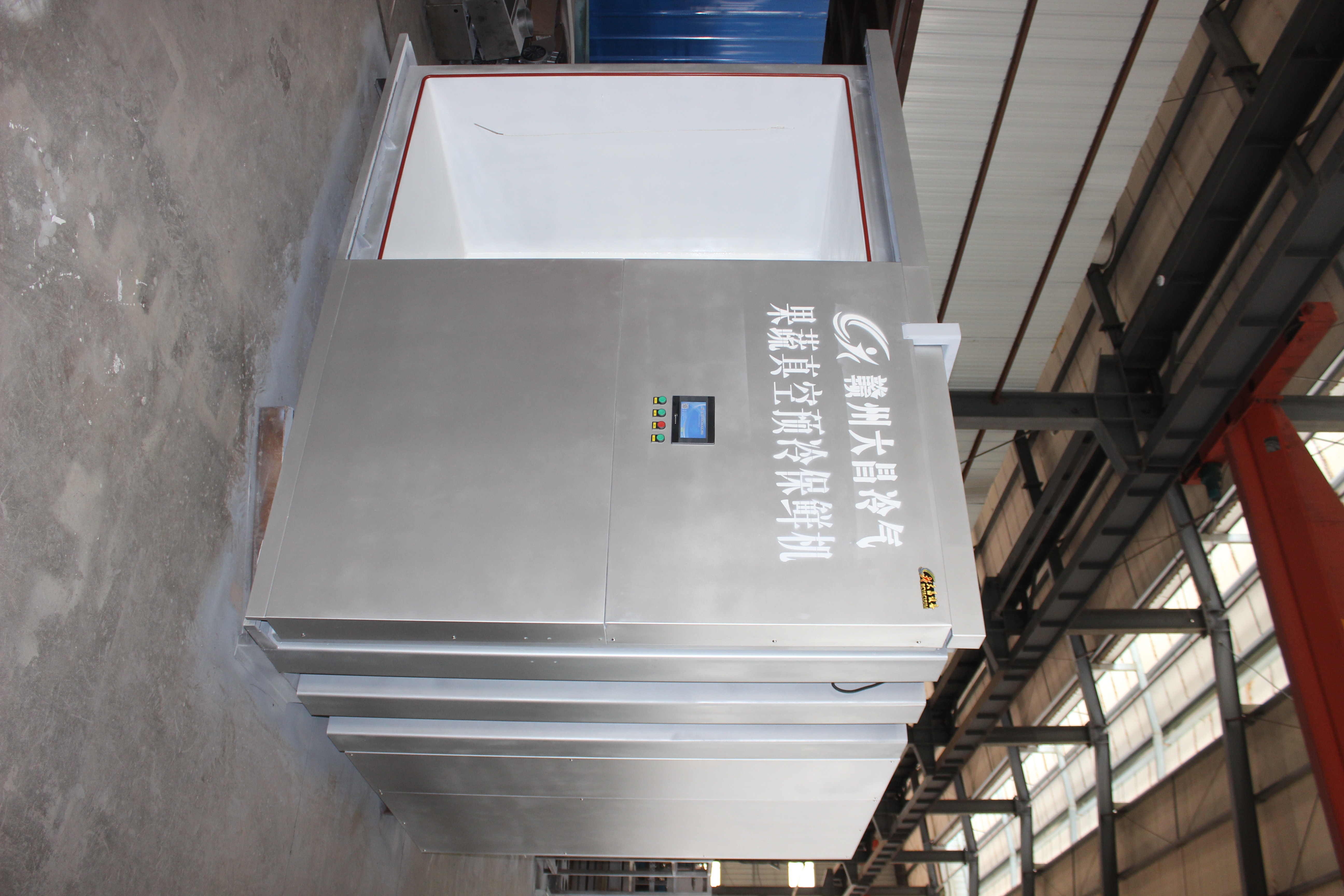
A vacuum cooler is a device that utilizes the physical properties of water to achieve rapid cooling of food materials. At a standard atmospheric pressure, the boiling point of water is 100 ° C, and as the ambient pressure decreases, the boiling point of water also decreases. At the same time, the heat consumed by water molecules evaporating at low pressure increases. Vacuum cooling is the process of artificially creating a low-pressure vacuum state to rapidly evaporate the moisture in food materials under low pressure, thereby achieving rapid cooling of food materials. The speed of vacuum cooling is very fast because water absorbs 4.186Kj of heat when the temperature of 1kg of water increases by 1 ℃ while the phase state remains unchanged. During the vacuum cooling process, water turns into water vapor and absorbs the latent heat of evaporation. According to the table data, the heat absorbed by 1kg of water when vaporized at 38 ℃ is 575.7 Kcal, which is nearly 600 times the heat absorbed by water when it rises 1 ℃ in liquid state. Therefore, compared to other cooling methods for food materials, vacuum cooling can achieve rapid cooling in a shorter period of time. In addition, the energy (power) consumed in the vacuum cooling process is also quite small. Practice has shown that vacuum refrigeration is based on the principle of direct evaporation, which means that the energy (power) consumed by the vacuum refrigeration system is only 1/3 to 1/5 of that of commonly used ammonia refrigeration systems and fluorine refrigeration systems. Compared to ammonia refrigeration and fluorine refrigeration systems, which require larger auxiliary power consumption to achieve refrigeration purposes, vacuum refrigeration is a highly energy-efficient refrigeration method.
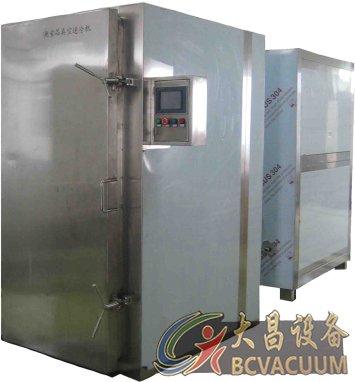
We have briefly introduced the principle of vacuum cooling machine here. In short, it utilizes the heat transfer principle in a vacuum environment to transfer heat from the material to the cooling medium (such as water or oil), achieving cooling of the material.
Original link: https://www.xshiyu.com/zkyljzx/225.html
Note: The copyright belongs to Ganzhou Dachang Air Conditioning Equipment Engineering Co., Ltd. For commercial reprints, please contact the author for authorization. For non-commercial reprints, please indicate the source.
Related Recommendations
Vacuum pre cooler information

Add WeChat
Main products: Vacuum pre cooling equipment, archive insecticidal disinfection and sterilization equipment, vacuum freeze dryer, thawing equipment, cultural relic archive image restoration equipment, low oxygen insecticidal disinfection machine, vacuum deodorization machine, dust removal disinfection and purification equipment, ultra-high pressure sterilization equipment, low oxygen chamber animal comfort equipment
Copyright © 2026 Xinshiyu Equipment All rights reserved. XML
XML