
Disadvantages of vacuum cooling
Vacuum cooling is a technique used to cool objects by exposing them to low temperatures in a vacuum environment. Although vacuum cooling has many advantages, there are also some disadvantages, which will be specifically introduced in this article.
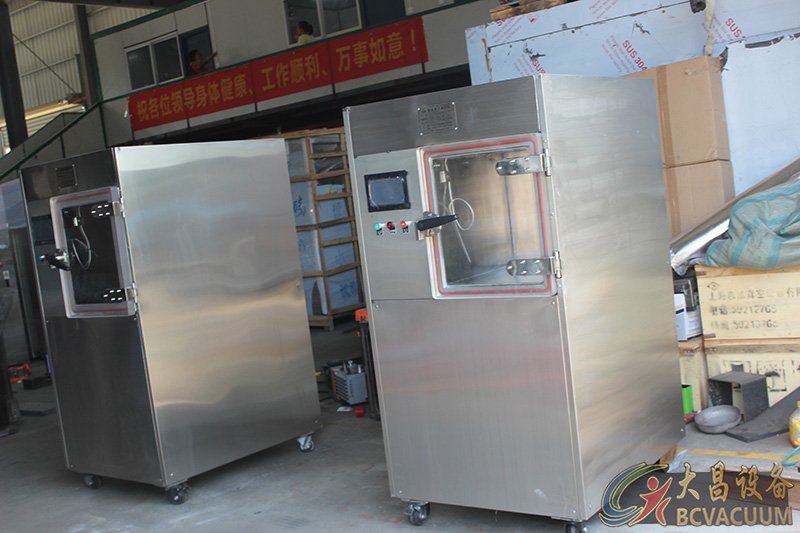
1. The working process of vacuum cooling, in other words, means that food materials are steamed again at low temperature under vacuum. Therefore, after the high temperature puffed food such as "oil gluten" and "Rolls of dried bean milk creams" is cooled in vacuum, the starch skeleton structure of the food has seriously collapsed, which has caused fatal damage to the entire shape of the food;
2. Not suitable for some materials that are not suitable or can lose water, but cannot be added with water, such as drug ointments, cosmetics, leather shoe ointments, etc;
3. Due to the evaporation of water, pure liquid food (fruit juice, beverage, Babao Congee, various paste flavorings of soy sauce, etc.) will cause serious splash and overflow. Therefore, cooling pure liquid food by vacuum cooling will cause loss or waste of liquid food products, and will also pollute the cooling treatment tank of the vacuum cooler and the contents of food material packaging.
4. There are also a certain number of food products that need to achieve morphological solidification (solidification) during the cooling process, which is not suitable for vacuum cooling. The reason is that vacuum cooling will produce pores inside the food, or cause loose structure and irregular external morphology of the food (such as horse hoof cake, jelly, grass jelly, etc.).
5. Cannot cool food with low water content. Vacuum cooling relies on the principle of low-pressure evaporation of water vapor to achieve refrigeration in food materials. That is to say, the more water the food material loses, the more the temperature of the food material drops. However, foods such as cookies, peach pastries, and fried chips cannot be cooled under vacuum because these materials themselves cannot provide the evaporation water required for vacuum cooling.
6. For food materials with dense organization, the cooling rate is slower. For example, eggs, Zongzi, taro, potatoes, beef, etc;
7. High cost and significant investment in disposable equipment. Therefore, for some products with low internal quality requirements for food materials or lower levels of food hygiene and safety requirements, as well as for cooked food product manufacturers with low added value or short shelf life (preservation and storage) requirements, they are generally not suitable for use.
That's all for my brief introduction on the disadvantages of vacuum cooling. Overall, vacuum cooling machines have drawbacks such as high cost, complexity, low efficiency, safety issues, and environmental impact. However, these are only one-sided and there is no need to worry.
Original link: https://www.xshiyu.com/zkyljzx/240.html
Note: The copyright belongs to Ganzhou Dachang Air Conditioning Equipment Engineering Co., Ltd. For commercial reprints, please contact the author for authorization. For non-commercial reprints, please indicate the source.
Related Recommendations
Vacuum pre cooler information

Add WeChat
Main products: Vacuum pre cooling equipment, archive insecticidal disinfection and sterilization equipment, vacuum freeze dryer, thawing equipment, cultural relic archive image restoration equipment, low oxygen insecticidal disinfection machine, vacuum deodorization machine, dust removal disinfection and purification equipment, ultra-high pressure sterilization equipment, low oxygen chamber animal comfort equipment
Copyright © 2026 Xinshiyu Equipment All rights reserved. XML
XML