
How Plasma and Ozone Work Together to Protect Archive Collections
When older files or boxed collections sit in storage for extended periods, they naturally collect dust and absorb ambient humidity. Over time, this leads to persistent musty odors and provides an environment where microscopic mold spores can thrive.
For staff in records rooms, libraries, and repositories, handling large incoming batches presents a practical challenge. Dusting items by hand disperses particles into the workspace, while standard enclosed cabinets often struggle to move air between tightly closed pages.
Looking at how airflow, plasma filtration, and ozone interact offers a clear view of how modern facilities manage these materials safely and efficiently.
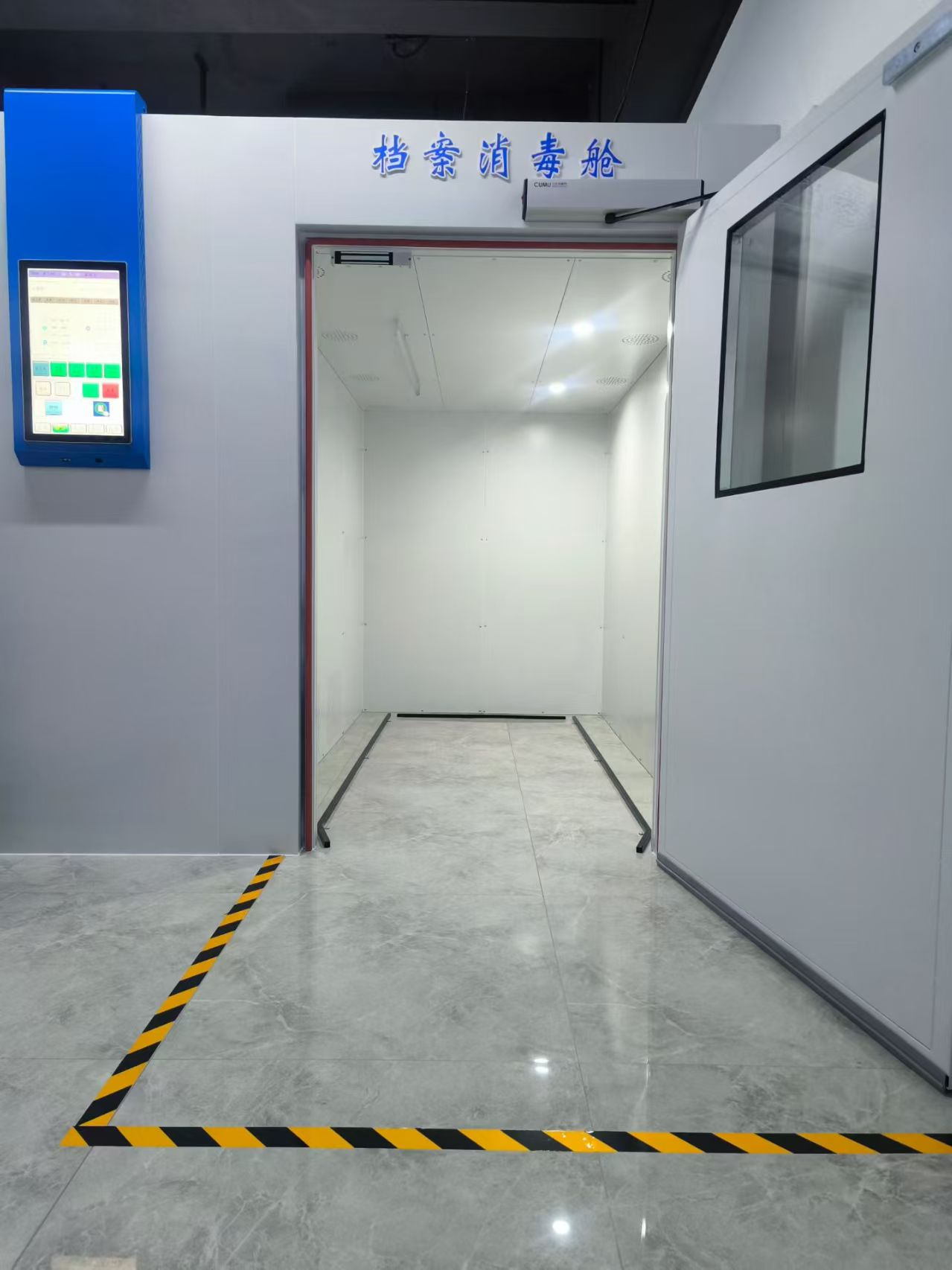
Step 1: Keeping Internal Air Clean Before Gas Generation
Standard ozone systems often draw in whatever air is in the room. If that air is full of paper fibers or fine dust, those particles settle on internal components over time and reduce efficiency.
By routing incoming air through a plasma filtration stage first, airborne dust and trace contaminants are removed before the air reaches the generation unit. This simple pre-cleaning step keeps the internal components free of buildup and allows the core system to run steadily for years without premature wear.
Step 2: Reaching Microscopic Gaps Between Pages
Paper files are dense, and closed volumes naturally resist airflow. Standard gases tend to move over the exterior surfaces without diffusing into the text block.
When low-temperature plasma pairs with ozone, the excited gas molecules disperse more actively through micro-gaps and along book spines. Over a typical 30-to-150-minute cycle, the gas works its way through tight spaces to neutralize dormant mold spores and break down volatile compounds that cause damp, stale smells.
Step 3: Simplifying Workflow with Roll-In Processing
Managing hundreds of folders individually is time-consuming.
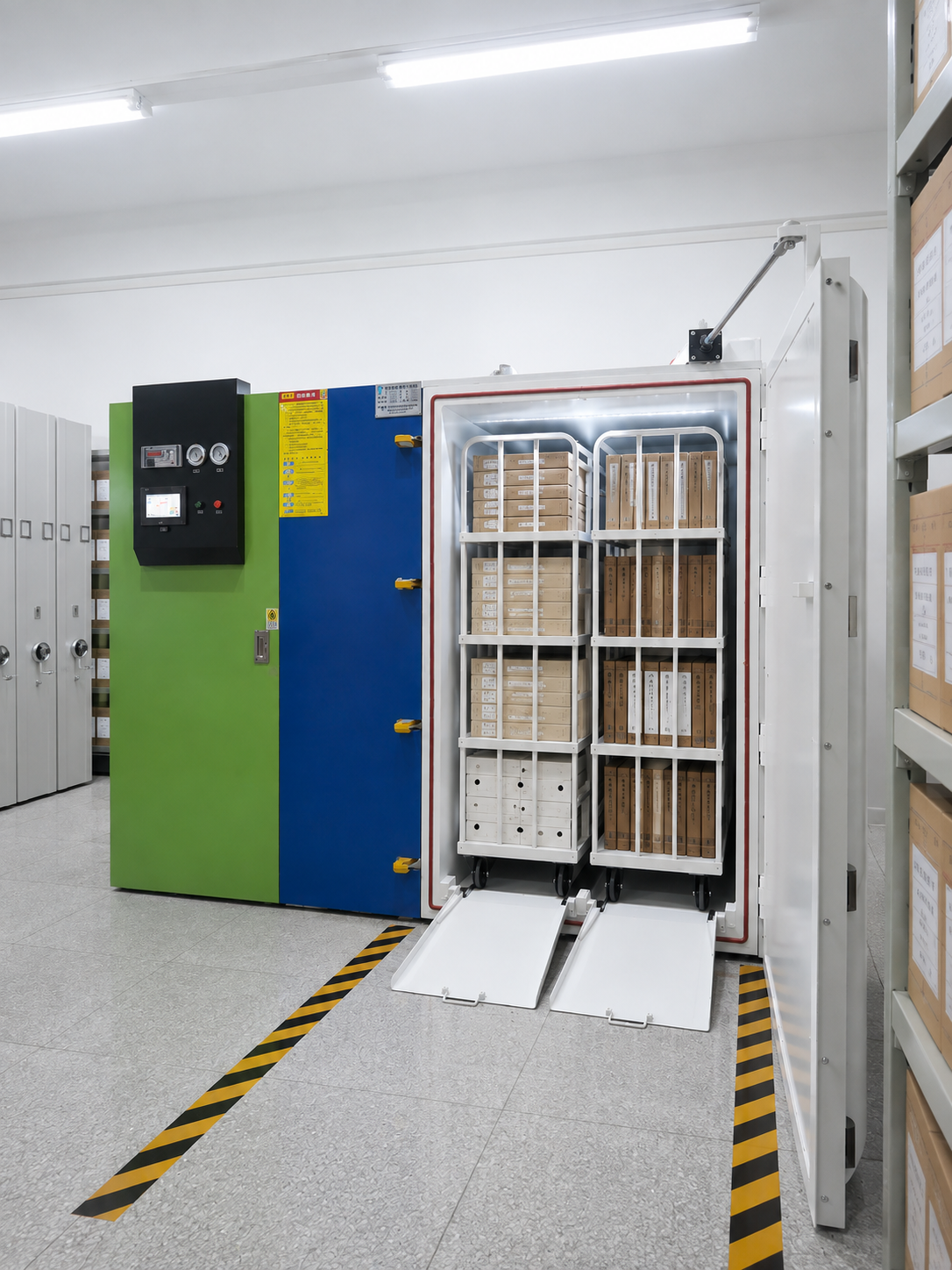
Chambers designed around standard utility carts allow entire loaded batches to roll in without unpacking. The internal system monitors gas levels, temperature, and humidity throughout the run. Once the cycle finishes, a catalytic stage converts residual ozone back into standard oxygen, letting staff move clean, odor-free documents directly to sorting or shelving without delay.
原文链接:https://www.xshiyu.com/germany/daxdjzx/326.html
Hinweis: Das Urheberrecht liegt bei Ganzhou Dachang Air Conditioning Equipment Engineering Co., Ltd. Für einen kommerziellen Nachdruck wenden Sie sich bitte an den Autor, um eine Genehmigung einzuholen. Für nichtkommerzielle Nachdrucke bitte die Quelle angeben.
Verwandte Empfehlungen
Informationen zum Dateisterilisator

WeChat hinzufügen
Hauptprodukte: Vakuum-Vorkühlgeräte, Archiv-Insektizid-Desinfektions- und Sterilisationsgeräte, Vakuum-Gefriertrockner, Auftaugeräte, Restaurierungsgeräte für Kulturrelikte, Archivkarten-Restaurierungsgeräte, sauerstoffarme Insektizid- und Desinfektionsgeräte, Vakuum-Geruchsentfernungsgeräte, Staubentfernungs-, Desinfektions- und Reinigungsgeräte, Ultrahochdruck-Sterilisationsgeräte, Tierkomfort- und Betäubungsgeräte für hypoxische Lagerhäuser
Copyright © 2026 Xinshiyu Equipment Alle Rechte vorbehalten.  Gan ICP Nr. 14002809-1 XML
 Gewinner der öffentlichen Nummer 36070202000515