
Freeze Drying vs. Dehydration: Qual è la differenza?
Quando si tratta di conservare alimenti e altri prodotti sensibili all'umidità, la liofilizzazione e la disidratazione sono due opzioni comuni. Entrambi i metodi rimuovono l'umidità e aiutano a prolungare la durata di conservazione, ma il modo in cui funzionano è molto diverso.
Per i trasformatori alimentari, i produttori di frutta e verdura, i produttori di alimenti per animali domestici, le aziende farmaceutiche e altre imprese, scegliere tra i due non è semplicemente una questione di prezzo delle attrezzature. Il metodo di lavorazione può avere un impatto diretto sull'aspetto del prodotto, la consistenza, il sapore, la durata di conservazione e il valore complessivo del prodotto.
Quindi, qual è la differenza tra liofilizzazione e disidratazione, e quale metodo ha più senso per la vostra produzione?
Cosa? is Freeze Drying?
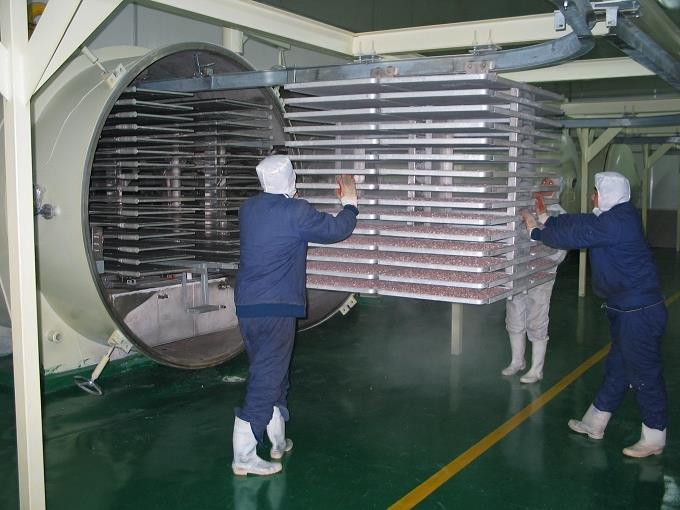
La liofilizzazione, chiamata anche liofilizzazione, rimuove l'umidità da un prodotto dopo che è stato congelato.
Il processo inizia congelando il prodotto a bassa temperatura. Viene poi inserito all'interno di una camera a vuoto. In condizioni di vuoto, il calore controllato fa sì che il ghiaccio nel prodotto cambi direttamente dal ghiaccio solido al vapore. Questo processo è conosciuto come sublimazione.
A typical asciugatrice industriale includes a vacuum chamber, refrigeration system, condenser, heating system, and vacuum system. These systems work together to control the temperature, pressure, and drying conditions throughout the cycle.
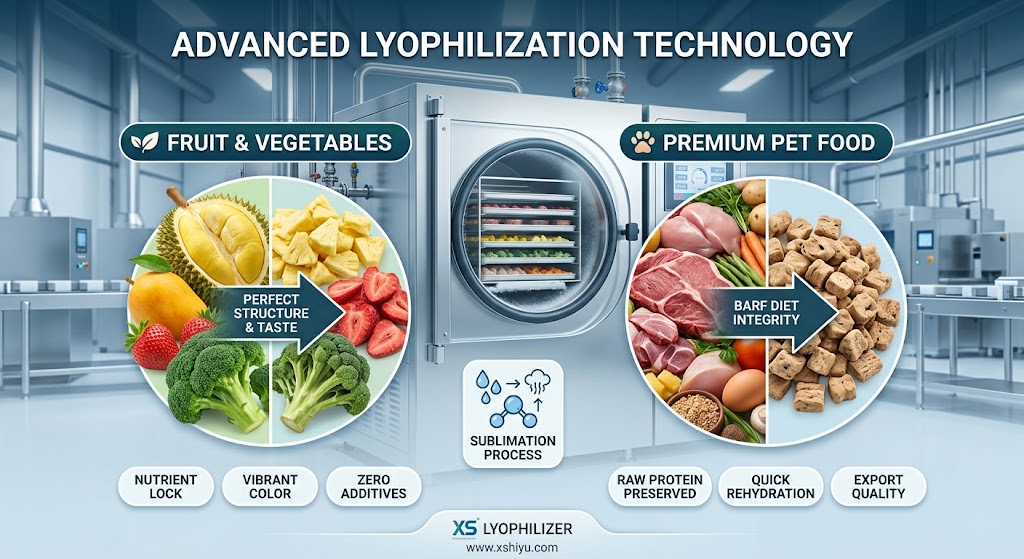
One of the main reasons manufacturers choose freeze drying is the quality of the finished product. Since the product is processed at relatively low temperatures, its original shape, color, aroma, flavor, and structure can often be preserved better than with conventional hot-air drying.
Freeze drying is commonly used for fruits and vegetables, premium snacks, pet food, coffee, biological materials, and pharmaceutical products.
Cosa? is Dehydration?
Dehydration is a more traditional way of removing moisture from food and other products.
In a typical dehydration process, heated air passes over or around the product. The heat causes moisture to evaporate, and the water vapor is carried away by the moving air.
Compared with freeze drying, dehydration equipment is generally simpler and usually requires a lower initial investment. It can also be a practical choice for products where changes in texture, color, or shape are not a major concern.
The main limitation is heat. Depending on the product and drying temperature, prolonged exposure to heat can lead to shrinkage, color changes, texture changes, and some loss of heat-sensitive components.
This is why conventional dehydration is often used for products such as herbs, vegetables, snacks, and other foods where a more traditional dried texture is acceptable.
Freeze Drying vs. Dehydration: Key Differences
The biggest difference between the two methods is how the water is removed.
During freeze drying, water is removed from the frozen product through sublimation under vacuum. During dehydration, water is removed by evaporation with the help of heat.
That difference has a noticeable effect on the final product.
Factor | Freeze Drying | Dehydration |
Main process | Sublimation | Evaporation |
Processing temperature | Low | Higher |
Vacuum | Required | Usually not required |
Product structure | Usually better preserved | More shrinkage |
Color | Usually well preserved | May become darker |
Flavor and aroma | Generally well preserved | Can be affected by heat |
Rehydration | Usually very good | Generally slower |
Initial equipment cost | Higher | Lower |
Processing time | Often longer | Often shorter |
Typical applications | Premium food, pet food, pharmaceutical products | Snacks, vegetables, herbs |
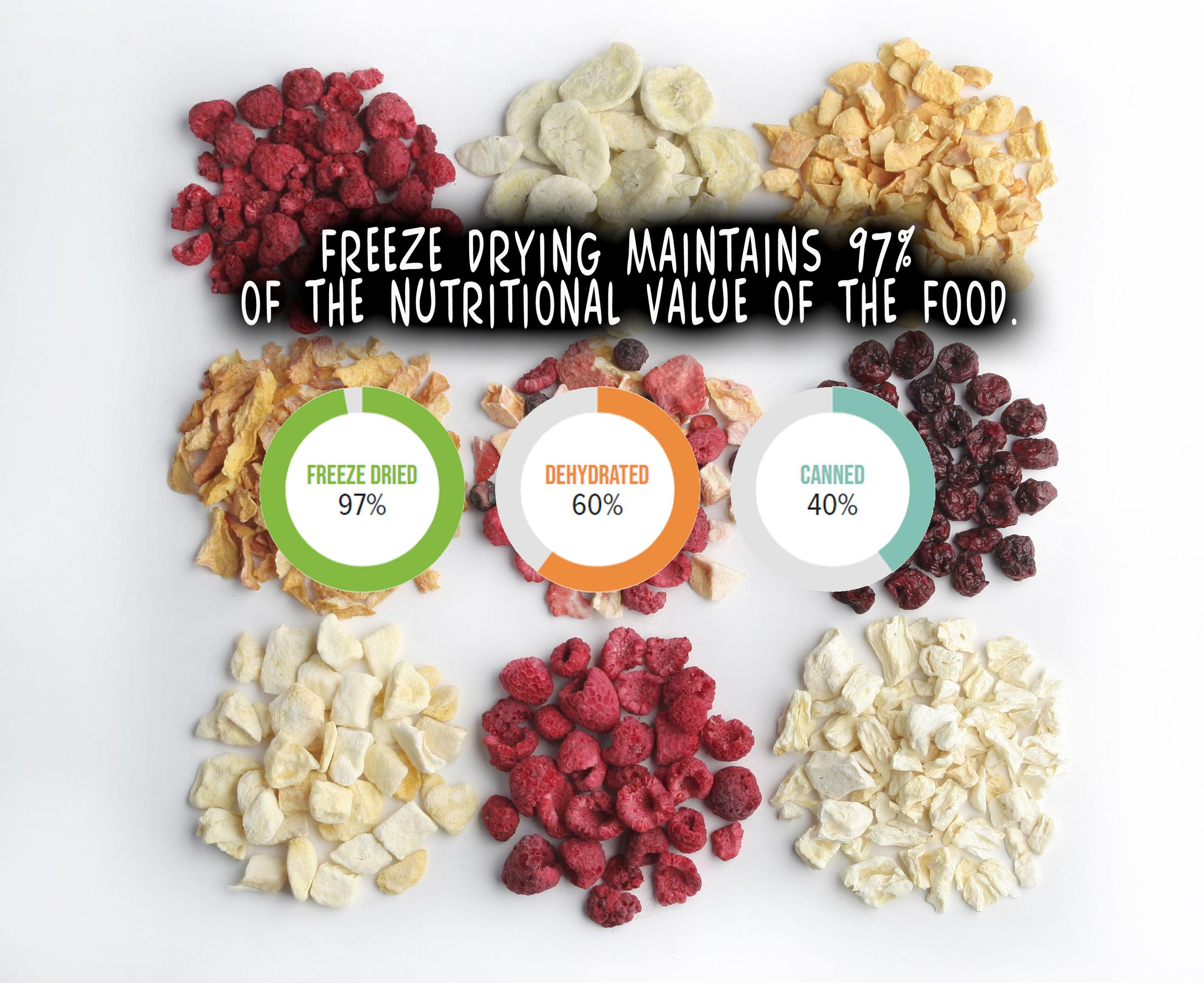
Product Quality: Where Freeze Drying Has an Advantage
For many manufacturers, product quality is the main reason for choosing freeze drying.
An industrial freeze drying machine works at low temperatures and under controlled vacuum conditions. This can help minimize the heat-related changes that are common with conventional dehydration.
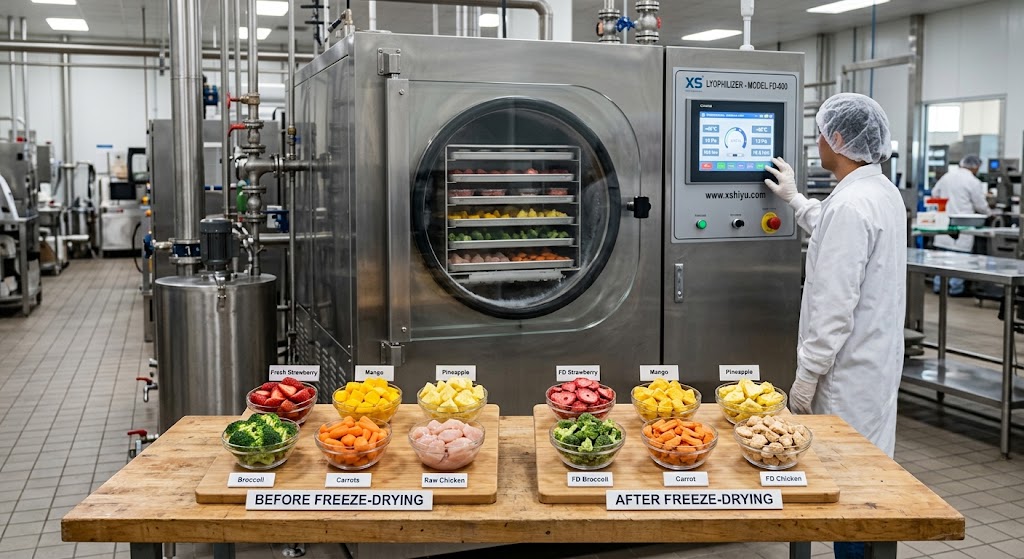
Take fruit as an example. Freeze-dried strawberries, mangoes, apples, and other fruits can retain much of their original shape and color while becoming lightweight and crisp. When water is added, many freeze-dried products can also rehydrate relatively quickly.
Dehydrated fruit, on the other hand, usually loses more of its original water while being exposed to heat. The result is often a denser, softer, or chewier product with more noticeable shrinkage.
Neither method is automatically better for every product. The right choice depends on what the manufacturer wants the final product to look and taste like, as well as how it will be sold.
What About Shelf Life?
Both freeze drying and dehydration can extend shelf life by reducing the amount of available moisture in a product.
However, simply removing moisture does not determine shelf life on its own.
The final result also depends on factors such as residual moisture, water activity, packaging, oxygen exposure, storage temperature, and the characteristics of the raw material.
For freeze-dried products, packaging deserves particular attention. The porous structure created during freeze drying can quickly absorb moisture from the surrounding air. Proper moisture-barrier packaging is therefore important for maintaining the product's crispness and quality during storage.
Is Freeze Drying More Expensive Than Dehydration?
In most cases, yes.
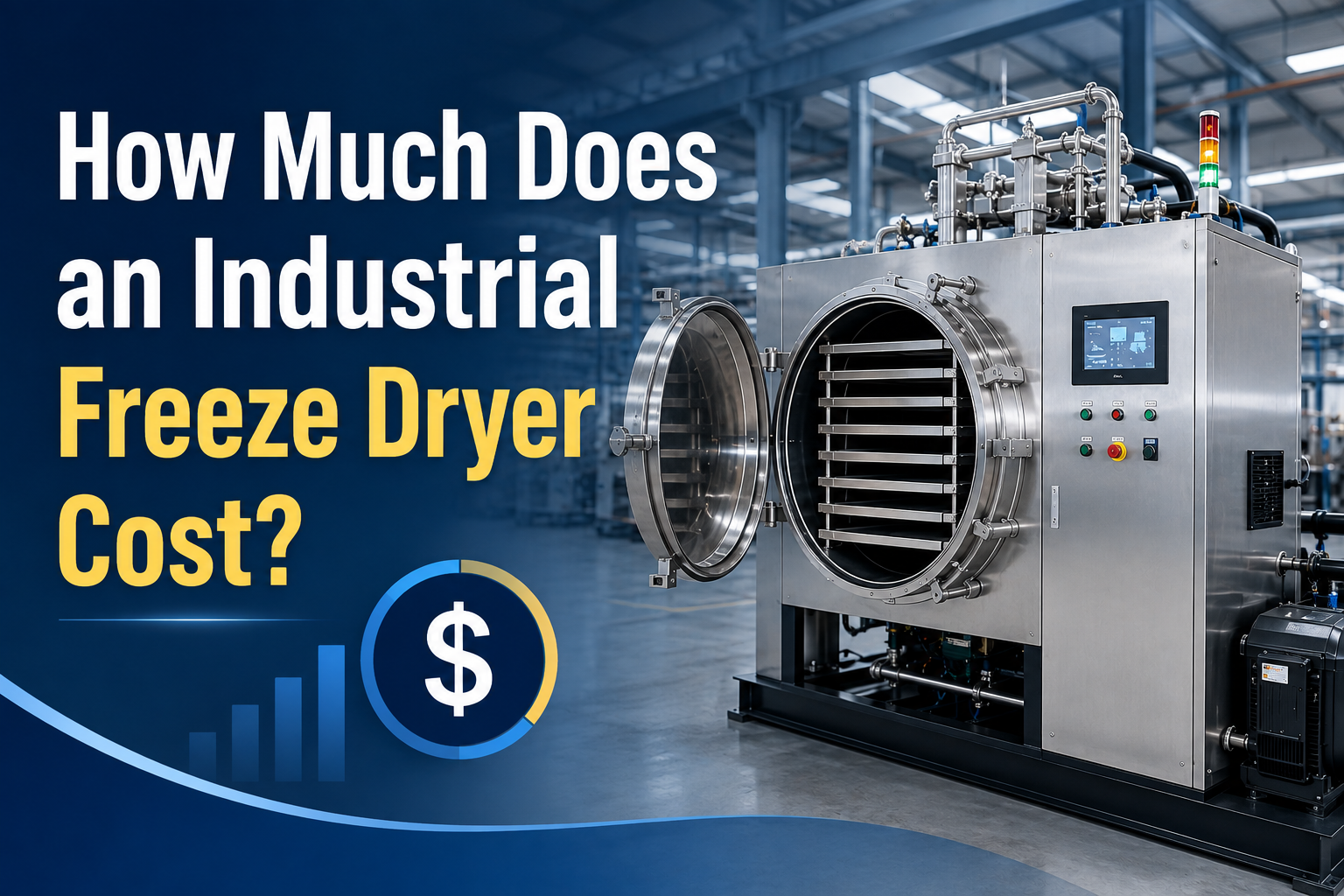
A commercial freeze dryer requires several major systems, including refrigeration, vacuum generation, a condenser, heating controls, and process control equipment. As a result, the initial investment is normally higher than that of conventional dehydration equipment.
But equipment price is only one part of the decision.
Manufacturers also need to consider production capacity, energy consumption, labor, processing time, product quality, and the selling price of the finished product.
For example, a producer selling premium freeze-dried fruit or freeze-dried pet food may be able to achieve a higher product value than a producer selling conventional dried products. In that situation, the higher investment in freeze drying equipment may make commercial sense.
Which Technology Should You Choose?
There is no single answer for every manufacturer.
Dehydration can be a good option when keeping the equipment investment low is a priority and some changes in texture, color, or shape are acceptable.
Freeze drying is worth considering when product quality and appearance are important, particularly for premium products where rehydration performance and product structure matter.
For instance, a company producing premium freeze-dried fruit snacks may benefit from an asciugatrice industriale. A manufacturer producing conventional dried vegetables or herbs, however, may find a hot-air dehydration system more suitable for its production requirements.
Before investing in a freeze drying machine, it is worth looking at the complete production process rather than focusing on machine capacity alone.
Important factors include:
· Type and characteristics of the raw material
· Required batch capacity
· Target final moisture content
· Desired product quality
· Processing time
· Energy consumption
· Available production space
· Expected production volume
· Packaging and storage requirements
These factors can help determine whether freeze drying is a practical investment for a particular application.
Final Thoughts
The choice between freeze drying vs. dehydration ultimately comes down to the product, production requirements, and target market.
Dehydration is generally simpler and requires a lower initial investment. It can work well for many conventional dried food products.
Freeze drying involves more complex equipment and a higher investment, but it offers significant advantages when maintaining product structure, appearance, flavor, and rehydration performance is important.
For manufacturers targeting premium food, freeze-dried fruit, pet food, specialty ingredients, or other high-value products, freeze drying can provide a way to produce a differentiated product rather than simply remove moisture.
If you are considering an asciugatrice industriale, the best starting point is to evaluate your raw materials, required production capacity, and finished-product requirements first. The right equipment should be selected around the product and production process—not the other way around.
原文链接:https://www.xshiyu.com/italy/ldgzjzx/342.html
Nota: il copyright appartiene a Ganzhou Dachang Air Conditioning Equipment Engineering Co., Ltd. Per la ristampa commerciale, contattare l'autore per l'autorizzazione. Per ristampe non commerciali si prega di indicare la fonte.
Raccomandazioni correlate
Informazioni sul liofilizzatore

Aggiungi WeChat
Prodotti principali: apparecchiature di preraffreddamento sotto vuoto, apparecchiature di disinfezione e sterilizzazione insetticida per archivi, liofilizzatore sotto vuoto, apparecchiature per scongelamento, apparecchiature per il ripristino di mappe di archivi di reliquie culturali, macchina per insetticida e disinfezione regolata a basso contenuto di ossigeno, macchina per la rimozione degli odori sotto vuoto, apparecchiature per la rimozione della polvere, disinfezione e purificazione, apparecchiature per sterilizzazione ad altissima pressione, attrezzature per il comfort e lo stordimento degli animali in magazzini ipossici
Copyright © 2026 Xinshiyu Equipment Tutti i diritti riservati.  Gan ICP n. 14002809-1 XML
 Vincitore N. Pubblico 36070202000515