
How to Clean & Protect Archive Books from Dust | Conservation Guide
How to Clean and Protect Library and Archival Books from Dust Damage
Dust accumulation is one of the most common yet underestimated threats to archival collections and rare library books. Far from being merely an aesthetic issue, particulate matter actively degrades historical paper, leather bindings, and cellulose materials over time. Implementing a structured cleaning protocol and utilizing professional HEPA-filtered cleaning equipment is essential for long-term cultural heritage preservation.
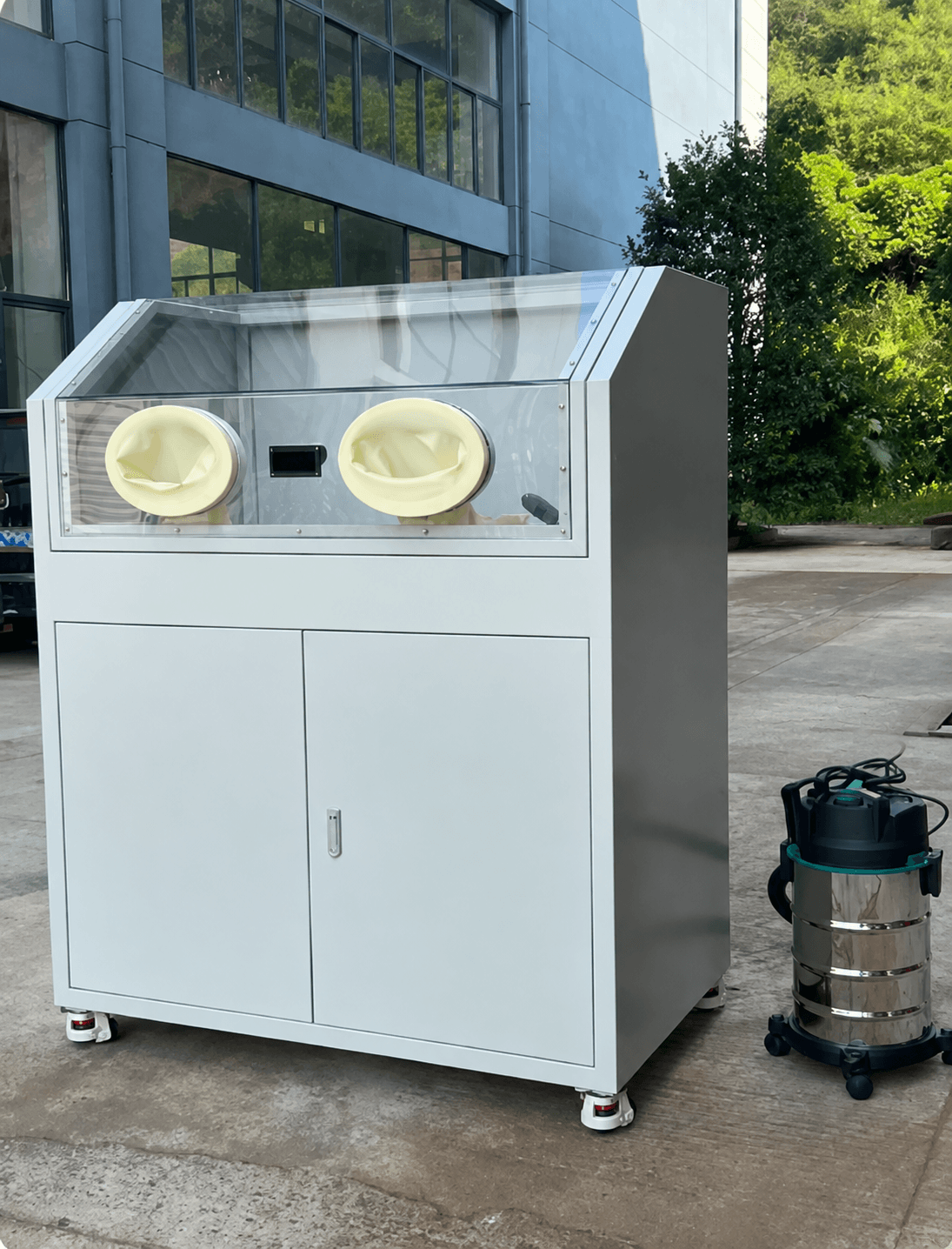
Why Dust Poses a Serious Threat to Books and Archives
Dust is not inert dirt. It is a complex mixture of abrasive mineral particles, acidic atmospheric pollutants, skin flakes, textile fibers, and biological contaminants such as fungal spores and insect frass.
When relative humidity fluctuates, hygroscopic dust absorbs moisture from the surrounding air, creating acidic micro-environments directly on the paper surface. This accelerates paper yellowing, embrittlement, and acid hydrolysis. Furthermore, dust provides an organic nutrient source for mold outbreaks, silverfish, and booklice. Every time a dusty volume is pulled from the shelf, abrasive grit scratches fragile leather and cuts into brittle paper edges.
Where Dust Settles: External Cleaning vs Page Cleaning
Studies in library preservation demonstrate that approximately 60% to 70% of accumulated dust settles directly on the top edge of the text block (the book head). Another 20% to 30% settles on the fore-edge, tail, and spine, while less than 10% penetrates between the closed pages.
Because the vast majority of contaminants reside on the exterior book edges, applying proper mechanical edge cleaning before opening a book is critical. Opening a dusty book without prior external cleaning forces abrasive particles down into the inner gutter and binding structure, where removal becomes significantly more difficult and hazardous.
How to Safely Clean Books in a Professional Preservation Environment
Traditional dusting methods, such as dry cloth wiping or standard non-filtered vacuums, are hazardous to archival collections. Dry wiping rubs abrasive grit directly into the binding, while ordinary vacuums simply exhaust fine particulate matter and active mold spores back into the room.
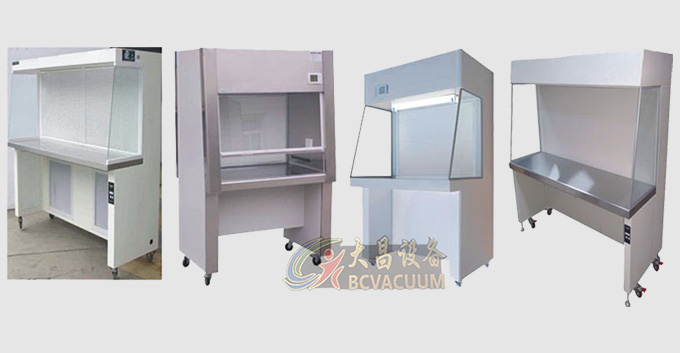
Professional conservation requires an enclosed manual book cleaning workstation equipped with high-efficiency HEPA filtration. Conservators place the volume inside the semi-enclosed chamber and use ultra-soft, anti-static brushes connected to adjustable micro-vacuum suction. The continuous negative airflow immediately captures dislodged dust and spores at the point of contact, preventing cross-contamination and shielding the operator from airborne allergens.
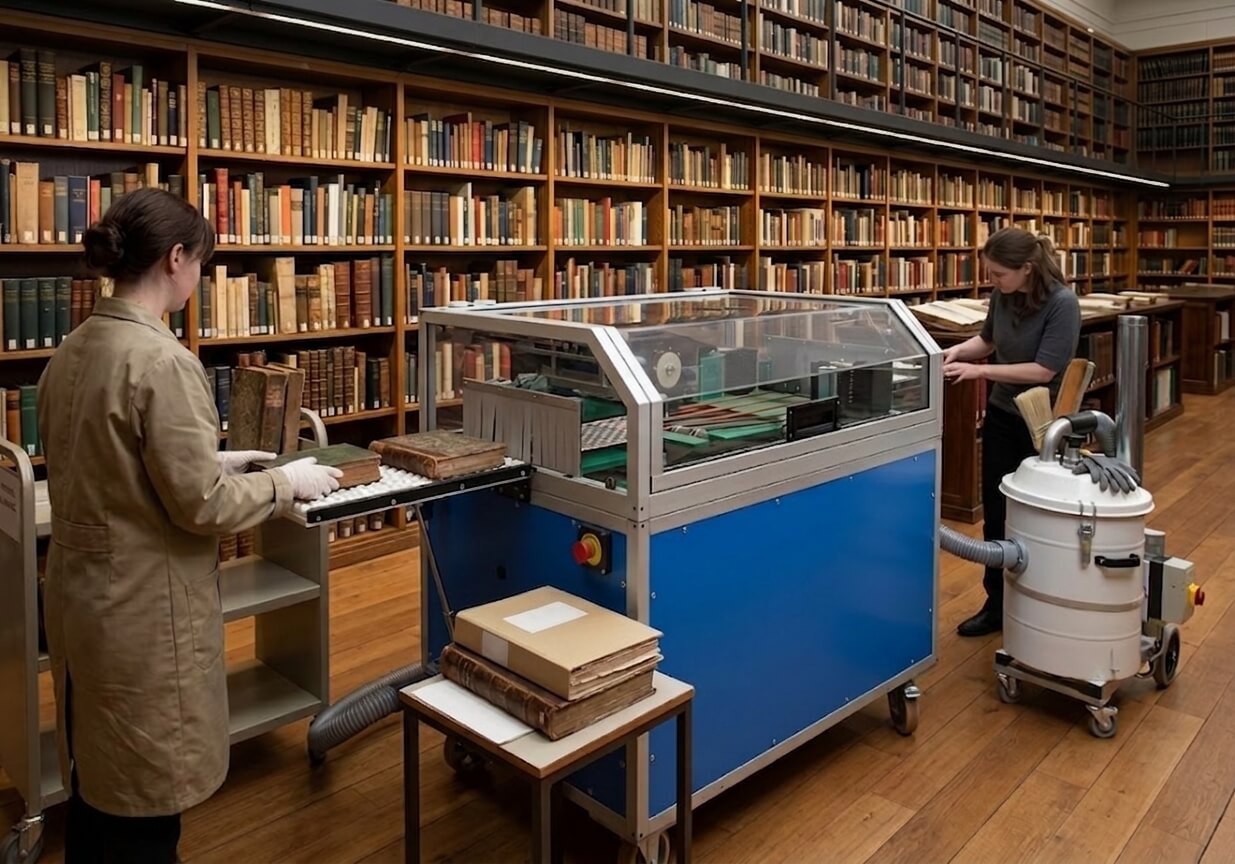
Recommended Cleaning Schedules for Libraries and Archives
High-traffic public reading rooms and open-stack collections should undergo systematic surface dusting every 6 to 12 months.
Closed archival repositories, rare book vaults, and special collections equipped with climate control typically require thorough cleaning cycles every 2 to 3 years.
All incoming acquisitions, donated collections, and volumes returning from external exhibitions must undergo mandatory intake quarantine inspection and surface cleaning before being integrated into permanent storage.
Long-Term Strategies for Dust Prevention
Routine cleaning must be paired with preventive conservation controls. Archives should maintain steady relative humidity between 45% and 55% and temperatures between 18°C and 22°C. Air handling units must be fitted with certified particulate filters, and shelves should ideally be placed away from direct airflow vents. Storing highly valuable volumes in acid-free archival boxes creates an effective physical barrier against airborne particulates.
原文链接:https://www.xshiyu.com/ccjhsbzx/322.html
Note: The copyright belongs to Ganzhou Dachang Air Conditioning Equipment Engineering Co., Ltd. For commercial reprinting, please contact the author for authorization. For non-commercial reprinting, please indicate the source.
Related recommendations
Dust removal and purification equipment information

Add WeChat
Main products: vacuum pre-cooling equipment, archive insecticidal disinfection and sterilization equipment, vacuum freeze dryer, thawing equipment, cultural relics archive map restoration equipment, low oxygen adjusted insecticide and disinfection machine, vacuum odor removal machine, dust removal, disinfection and purification equipment, ultra-high pressure sterilization equipment, hypoxic warehouse animal comfort and stun equipment
Copyright © 2026 Xinshiyu Equipment All rights reserved. Gan ICP No. 14002809-1 XML
 Winning Public No. 36070202000515